The basic facts of the North Bridge Company from Peoria, Illinois were first covered by Garage Hangover way back in 2008. According to the website, the band members included:
Greg Schuller (lead vocals)
Mike Somerville (lead guitar); replaced by Gary Shawgo (lead guitar, backing vocals)
Ed Mooberry (rhythm guitar)
Dennis Stewart (keyboards)
Mike Creek (bass)
Frank Ballard (drums)
For a time, the group was sponsored and promoted by a Peoria music store, S & G Music.
When the group recorded their only single in 1968 at the Golden Voice Recording Co. in nearby South Pekin, the original label was meant to read S & G but was misprinted as Sand "G":
Crying All Alone (Schuller) / Strange Land Strange People (Stewart)
The single was also released on the Golden Voice label.
In November of 1968 the North Bridge Company hosted a Battle of the Bands at the Exposition Gardens in Peoria. The event was co-sponsored by the local Bergner's and the Peoria Jaycees. The "battling" groups included: The Driving Reign, The Match Bachs, The 9th Century Serfs, The Winter Harvest, The Unknown Source, The Attire, Page IV, 89th Congress, The Bus Stop, The Delegation, The Organization and The Suburban 9 To 5.
A few months later the group competed in a "battle" against some of the same groups.
The North Bridge Company continued to perform at dances and teen centers around central Illinois for at least another year. Here they are performing at the 1970 Valentine Dance at Limestone High School in Bartonville, Illinois:
Jam Factory at Limestone Community High School, 1969
Advertisements from the summer of 1968 described Peoria's own Jam Factory as "the Newest, Hottest 6-Piece Band in Central Illinois." The group at that time consisted of:
Dick Bush, vocals
John Miller, guitar
John McFarlane, bass
George McCullough, drums
Rodger Himmel, saxophone
John Middleton, trumpet
Years before, Dick Bush had performed locally with Jerry Milam and the Stan'Dels. Together they had recorded a single for Hit Records back in 1963. John "Pops" McFarlane and Rodger Himmel had previously been in the Peoria group, the Soulmates. McFarlane, whose sister is Elaine "Spanky" McFarlane of Spanky and Our Gang, had also previously played with local legend Wild Child Gipson. Trumpeter John Middleton was a student at Bradley University at the time. Middleton and Himmel were both from nearby Manito, Illinois.
Jam Factory recorded a single at Jerry Milam's Golden Voice Recording Co. in South Pekin in 1968. Both sides were written and produced by Eddie Howard. The record was released by October of that year.
"Give Me The Right (To Love You Baby)" b/w "Good Lovin' Woman"
The single was also released on Stereo Village Records, a label owned by Bill Curtis that promoted his chain of electronics stores found throughout central Illinois.
Jam Factory performed at night clubs and dances around the Peoria area for about two years. They had regular gigs at Club Peorian, Mike's Lounge, The Elbow Room, the Flame Steak House in Pekin and the Town House in Havana.
On May 29, 1969 the Jam Factory, along with Stoned Soul, opened for the Bob Seger System at the Expo Gardens Opera House in Peoria. Stoned Soul featured Peoria-native Danny Beard, who later joined the Fifth Dimension.
By 1970, a Syracuse, NY band also called Jam Factory released an album on Epic Records. The group was briefly promoted across the country by Youth Beat, a syndicated newspaper column, that gave away posters of the band to anyone that wrote in. The Peoria-based Jam Factory however seems to have called it quits by this point.
A new group, Dick Bush & The Sack, was performing regularly at King Henry VIII in Peoria by April 1970.
The Changing Times at Bradley University fraternity dance, 1968
The Changing Times were a teenage group from Bartonville, Illinois that performed around the Peoria area for much of 1967 and 1968. Members of the quintet included Danny Newby on bass, Martin Hagerdorn on keyboards and Curtis Brown on drums. (The other members have not yet been identified). During their brief time together, the group released one single on the Thunder label.
The Changing Times recorded their lone 45 at the Golden Voice Recording Co. in South Pekin in 1967. It consisted of two covers: Jimmy Reed's "Big Boss Man" and Vanilla Fudge's "You Keep Me Hangin' On" (written by Holland-Dozier-Holland and first recorded by the Supremes). An advertisement for the Changing Times' performance at the Canton Teen Center from November 1967 stated "Will Have A New Record Out Soon."
In the summer of 1967 the Changing Times were runners-up in the statewide Combo Clash at the Young America Fair (part of the Illinois State Fair). They lost to the Holidays from Springfield. Their biggest performance however came the next year when they were one of three Peoria groups to open for the Turtles at the Expo Gardens Youth Building on April 15, 1968. The other two local groups were the Suburban 9 to 5 and the Coachmen.
For the next six months or so, the Changing Times continued to perform at area dances including several at Bradley University. The group appears to have broken up by 1969.
Marty Hagerdorn eventually joined the band Souled Out, another Peoria-area group that had recorded a single at Golden Voice. They later changed their name to the Kule-Aid Kids. Over the years, Danny Newby played in several area bands as well including the Flying D'Rito Brothers. Newby passed away in 1994 at the age of 44. Hagerdorn passed in 2002.
In the summer of 1942, country music performer Red Foley and his wife Eva Overstake (aka Judy Martin) operated a "dude ranch" at Mackinaw Dells near Congerville, Illinois.
For one brief season, from the end of May until Labor Day weekend, the couple hosted a series of weekly concerts while also offering pony rides, roller skating and concessions.
Foley, who grew up near Berea, Kentucky, was a rising star in country music at the time and a featured performer on the WLS National Barn Dance which was broadcast on Saturday nights. He hosted his own show, along with his "Saddle Pals," during the week on the Chicago station.
Overstake had been a regular on WLS, along with her sisters, since she was a teenager. Eva, Evelyn and Virginia Lucille (aka Jenny Lee Carson) were originally known as the Three Little Maids. The Overstake sisters had grown up in Decatur, Illinois.
Ramblin' Red Foley's bio in the 1943 WLS Family Album referenced the new business venture this way: Last year he and his wife, the former Eva Overstake, bought a farm in Illinois, which they plan to make into a "dude ranch."
In truth, Foley had only leased the pre-existing facilities at the Mackinaw Dells. Situated halfway between Peoria and Bloomington, the area was a well-established recreation spot. The park, which included a pavilion and a roller rink, had been hosting dances, picnics and celebrations for decades.
In fact, in the 1930's the WLS Barn Dance booked a number of shows at the Dells including a "monster celebration" on the 4th of July, 1934. It is possible that Foley had even performed there during those years and was already familiar with the area when he decided to put his name on the place.
How involved Foley was with the day to day operations of the park is however unclear. Foley and Overstake, who lived in the Chicago area with four children at the time, did not appear to relocate to the Mackinaw Dells even for the summer.
Instead, as reported in the Woodford County Journal, Foley was renting a room at a residence in nearby Eureka on Friday, Saturday and Sunday nights for the season.
On the radio that summer, Foley was on hiatus from the Saturday night Barn Dance show on WLS but kept his Tuesday morning slot with the Saddle Pals which suggests he was returning to Chicago early every week.
The stage shows at the Dude Ranch ran for 14 weeks, always on Sunday, rain or shine. Admission was 30 cents including tax. (Free for children under 10 and men in uniform).
Foley, often listed as "Foreman," was naturally always on the bill along with Eva. Here is a list of additional musical performers and novelty acts:
May 31
Hoosier Hot Shots, Jolly Joe Kelley, Texas Tommy and his Wonder Horse Baby Doll, Tex Atchison’s Lone Star Ramblers
June 7
Pat Butram, Prairie Ramblers, Bolores & Her Bulldog, Bob & Jean in Skating Thrills, Ruth Baxter
June 14
Dezurik SIsters, Rusty Gill, Al Verdi & Co., Bento Bros, Rita and Farm Dance Band
June 21
Mac & Bob, Maple City Four, Eric Filmore & Co (Acrobats on a Perch), Ted & Flo Vollet (Balancing and Juggling), Mary Joe & The Lumberjacks
June 28
Arkansas Woodchopper, Patsy Montana and Her Partners, Ted & Flo Vollet, Mary Joe & The Lumberjacks
July 4 & 5
Cousin Emmy & Her Kinfolks, Farmer Bill, Polly and Her Bunkhouse Boys, Alma Deane, Grace Wilson
July 12
WLS Rangers, Pepper Hawthorne, Hubert Dyer, Billy Woods
July 19
WJJD Supper Frolic: “Red” Belsher, Paul Grove, Don White, Millie and Marge, Frontiersmen
August 2
Poppy Cheshire, Skeets & Frankie (of Radio Station KMOX St. Louis), Beehler’s Hollywood Animals
August 9
Lulu Belle & Scotty, Texas Tommy and his Wonder Horse Baby Doll, Lumber Jacks (from WJBC)
August 16
Chuck Acree, Bill O’Connor (Irish Tenor), Screw Ball Club (from WDZ), Lumber Jacks (WJBC), The Noonans
August 23
Cumberland Ridge Runners, Karl & Harty, Doc Hopkins, The Blue Eyed Boy, Coco & Teddy, Baker’s Trained Mule
August 30
Whitey Ford (The Duke of Paducah)
Sep 6 & 7
Prairie Ramblers (WLS), Parker Bros., Carl Thorson, WDZ Screwball Club
On Saturday June 27th, Red Foley and Patsy Montana were guest performers on the WLS National Barn Dance which was broadcast from McCormick Gymnasium at Illinois State Normal University in Normal, in cooperation with the McLean County USO Committee and the McLean County War Board. The price of admission was 50 pounds of rubber or 100 pounds of scrap metal.
Patsy Montana detailed the show and her time at the Dude Ranch in her autobiography, The Cowboy's Sweetheart:
"Illinois can be terribly hot in the summer, and that day was no exception. They held the show in a gymnasium and with a big crowd it was stifling. I was to go on last, and I waited in the heat. It was like old times having Salty, Jack and the rest of the Ramblers there.
It just got too hot in the gym so they decided to move everything outside. I finished the show with "I'd Love To Be A Cowboy" and "I Want to Be a Cowboy's Sweetheart."
After the show we loaded up and drove back to our hotel in Bloomington. The next morning we gathered for breakfast and went over the previous night's show, then we loaded up and headed out to Red Foley's Dude Ranch.
We arrived, unloaded and set up for that evening's show and we drove to a nearby town and had supper. That evening's show was good, and it was hard to leave Red and Eva Foley. You would think, being on the road so much and running into all of our friends, we could manage more time to visit. It seldom happens that way. You arrive in time to set up for a show, do the show and just as quickly head to another town to repeat the process."
__
The Red Foley "Dude Ranch, " a wartime experiment, didn't last. Foley would soon move on to bigger and better opportunities.
The Mackinaw Dells pavilion and roller rink changed hands many times in the decades that followed and the spot was eventually converted into horse stables. The final remnants of the Dells pavilion was razed in the 1990's after years of disuse.
The Vagrants from Garbagepool, England (as suggested by the drum head in the photo) were in fact a popular Peoria, Illinois band that was active from 1965-1967. The group was often billed as Uncle Billy & The Vagrants and was later known as The Furniture.
In addition to the name changes, the group went through a number of lineups over the course of a few short years.
According to WWCT Basement Tapes Who's Who (The Gilded Book), the group included Greg Williams and "Uncle Billy" Kendall on guitars, Dave Taylor and Robyn Sleeth on drums, "Snake" King and Ken Anderson on bass, Rick Henson on keyboards and Mike McCabe on sax.
A Garage Hangover post regarding another Peoria group, North Bridge Company, mentions the Furniture may have briefly included NBC's Gary Shawgo as well Ron Stockert and Jerry "Pork" Armstrong (though both were likely in A.J. & The Savages NOT The Vagrants around this time).
Starting in the summer of 1965, the Vagrants played a number of dances around the Peoria area. They also performed regularly in Galesburg, Illinois at Wayne Dennis' Teen-A-Go-Go. Dennis appears to have been the group's manager.
On Sunday October 9, 1966, The Vagrants opened for Paul Revere and the Raiders at Spaulding Auditorium in Peoria. Tommy Roe also performed along with two other Peoria groups - The Coachmen and The Shags.
Sometime near the end of 1966 the Vagrants recorded their only single in Chicago for Stature Records. Sam Cerami, the label owner, is said to have changed the band's name to The Furniture. By December of 1966, the group was starting to be billed under the new name.
Special thanks to Bob Paton for the band photo.
On December 28th, the Furniture (along with the Coachmen) opened for the Yardbirds at the Expo Gardens in Peoria for two shows. The Yardbirds lineup for the show included Jimmy Page on guitar, Keith Relf on vocals and harmonica, Chris Dreja on bass and Jim McCarty on drums. Jeff Beck had left the tour prior to the Peoria performance.
The Furniture's 45 was eventually released in early 1967. The a-side was a cover of the Spencer Davis Group's "Keep On Running." The b-side was an original tune, though strongly-influenced by the Kinks, called "I Love It Baby."
"I Love It Baby" is credited to Randy Moody who doesn't appear to have been a member of the band. Thanks to a comment that Moody left on the above YouTube video for the song, we have his version of the story:
I wrote this song in 1966 for a group from Peoria, Il. who at that time were named Uncle Billy and The Vagrants. Sam Cerami, the owner of Stature Records, re-named them "The Furniture" which I wasn't wild about...We recorded this at Sound Incorporated Studios in Chicago...The engineer was the great Stu Black, who was famous for making many hits for other artists...I was approached on a Wednesday night by the agent of the Vagrants (The Furniture) who told me he needed two brand new songs sounding similar to the Kinks for a recording session THAT Saturday!...I wrote "I Love It Baby" that night and "Maybe I'm Trying Too Hard" the next night...I intended for "Maybe" to be the "A" side, but it was never released..."I Love It Baby" was receiving great airplay by DJ's who liked it even though it was the "B" side...Then for unknown reasons, Sam pulled it out of publication and off the air, so it never became as popular as it would have been otherwise...
The rumor was that Sam was an A.R. man for London Records and they viewed his label as a conflict of interests...Footnote: I never made a penny from this song despite my contract, which is typical of the Music Industry...Please forgive me if I've bored anyone with this history of the song...David R. (Randy) Moody.
Curiously the group went back to being billed as Uncle Billy (listed here as Uncle Billie) and the Vagrants in March 1967 despite having a record out as the Furniture.
The group does not appear to have lasted much longer under either moniker.
Guitarist Greg Williams would go on to join the Galesburg group the Buster Browns. The Buster Browns released one single on Golden Voice in 1968 with both songs being written by Williams.
According to the Gilded Book, which was published in 1981, Uncle Billy Kendall "went on to become a Berkeley grad" and "is now in the recording and production business."
One additional note:Randy Moody mentions in his comment above that the Furniture recorded his other original "Maybe I'm Trying Too Hard" but it was never released. The Gilded Book however refers to "Maybe I'm Trying Too Hard" as the band's first 45. It erroneously credits the song to Williams. It refers to the "Keep On Running" as the Vagrants' second disc.
I've never seen any proof that "Maybe I'm Trying Too Hard" was ever pressed, even as a demo, but it is certainly possible. If you have any additional information please reach out to us at: downstatesounds@gmail.com
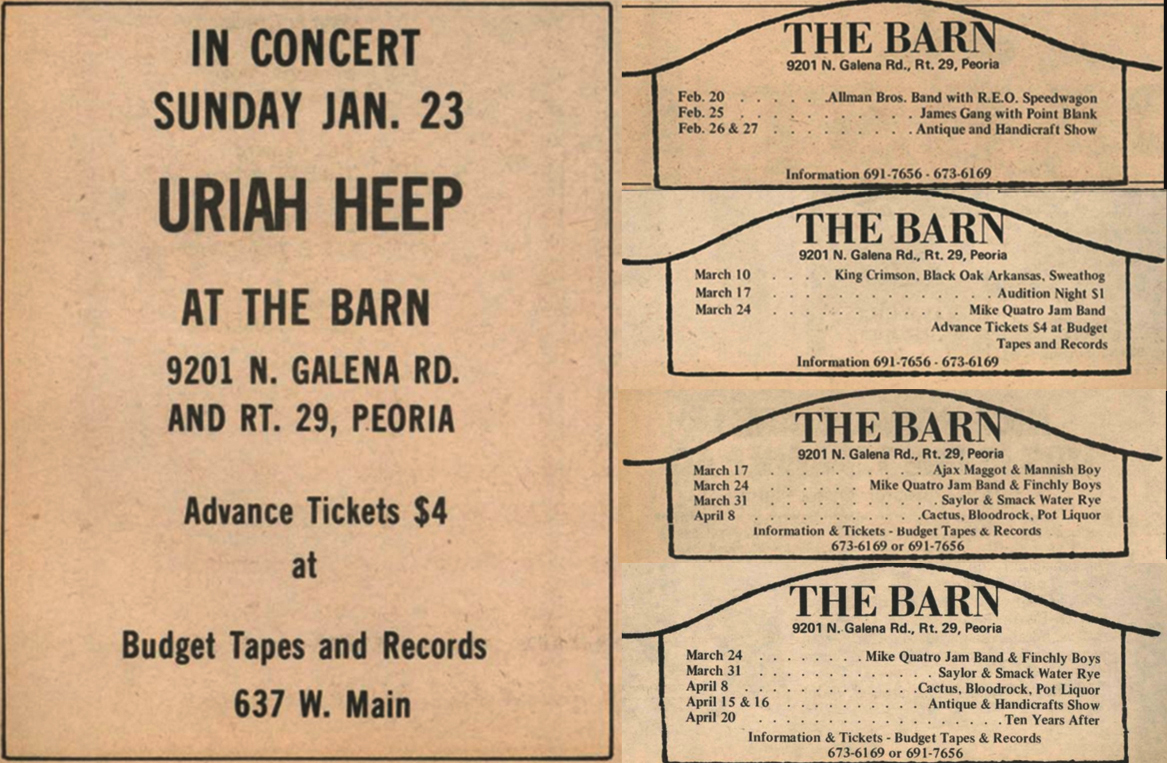
In the early 1970's, concert promoters Bill Love of Love, Inc and Jay Goldberg, then owner of Budget Tapes & Records in Peoria, organized a series of rock concerts at the Barn (9201 N. Galena Rd., Route 29) just north of Peoria, Illinois. These shows featured some of the top touring rock bands of the era along with various local groups. Nearly two dozen shows have been identified over a one year period but there were likely several more.
We need your help documenting this short-lived but important venue in central Illinois' rock history! If you attended a show at the Barn in '71-'72 and can add to the list of shows or just have a story to tell we'd love to hear it. Also, if you have any photos, posters, flyers or recordings of any kind we'd love to see and hear them. Please reach out to us at:downstatesounds@gmail.com
THE CONCERTS
May 22, 1971 Canned Heat
Jun 4, 1971Bloodrock
Jun 19, 1971Spirit
Jul 9, 1971The Byrds, Sunday, Godzilla
Jul 16, 1971Edgar Winter's White Trash, Morning Morning, All Star Frogs
Jul 23, 1971Alice Cooper, Brownsville Station
Aug 14, 1971Crow, Fanny, Podipto
Aug 21, 1971Teagarden & Van Winkle (Bob Seger), Brownsville Station
Aug 27, 1971Sugarloaf, Remedy, Morning Morning
Sep 4, 1971Black Oak Arkansas, The Mackinaw Valley Boys
Sep 11, 1971Mason Profitt, Wilderness Road
Sep 22, 1971Alice Cooper, Mike Quatro Jam Band
Nov 9, 1971Ted Nugent and The Amboy Dukes, Savage Grace
Dec 31, 1971Edgar Winter's White Trash
Jan 23, 1972Uriah Heep
Feb 20, 1972Allman Brothers, REO Speedwagon
Feb 25, 1972James Gang, Point Blank
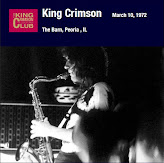
Mar 10, 1972King Crimson, Black Oak Arkansas, Sweathog
Mar 17, 1972Ajax Maggot, Mannish Boy
Mar 24, 1972Mike Quatro Jam Band, Finchley Boys
Mar 31, 1972Saylor, Smack Water Rye
Apr 8, 1972Cactus, Bloodrock, Pot Liquor
Apr 20, 1972Ten Years After (CANCELLED?)
May 7, 1972Quicksilver Messenger Service
May 13, 1972Fleetwood Mac, McKendree Spring, Ashton Gardner & Dyke
RECORDINGS
An incomplete live recording of the King Crimson set from March 10, 1972 has been released by the band in several different formats over the years. One track from the set, "Peoria" aka "Groon Peoria," was included on the band's 1972 live album Earthbound.
In 2011, King Crimson officially released more of their set digitally (seven tracks total though several are incomplete) and again in 2017 on CD & Blu-Ray audio as part of their Sailors' Tails box set.
A bootleg recording of the Alice Cooper show from July 23, 1971 can be found on YouTube.
FLYERS & POSTERS
Special thanks to Bill Risoli for sharing these images.
REVIEWS & ADS (click image to enlarge)
HISTORY OF THE BARN
Located seven miles north of Peoria, the Barn was build in 1937 and was originally known as Riverview Stables. At the time it was one of the best showplaces for horses in central Illinois and was once home to the Peoria Riding Club. In 1949 it was bought by Max Baty who renamed it Baty's Barn. In addition to horse shows, the venue hosted farm auctions, hog and cattle sales as well as tractor, boat and RV shows.
By September of 1954, Baty had replaced the arena floor with concrete and started to hold dances and benefit concerts. Here are some of the shows we were able to identify from 1954-1967:
Sep 10, 1954Leo Lukehart & His Band w/ Barbara Waldron
Sep 11, 1954Bill Reardon & His Rambling Playboy Entertainers
Sep 17, 1954Joe Evanick & His Orchestra w/ Sharon Evans
Sep 26, 1954Leo Lukeheart & His Band
Nov 12, 1954The Rhythm Rascals w/ Dusty Rhoads
Nov 20, 1954Fats Brown & His Rhythm Ramblers
Nov 27, 1954The Rhythm Rascals w/ Dusty Rhoads
Dec 18, 1954Fats Brown & His Rhythm Ramblers
Jan 22, 1955Fats Brown & His Rhythm Ramblers
Jan 30, 1955Shep Fields and His Rippling Rhythm
Feb 5, 1955Fats Brown & His Rhythm Ramblers
Feb 12, 1955Fats Brown & His Rhythm Ramblers
Feb 15, 1955Buddy Moreno & His Orchestra
Feb 16, 1955Leo Peeper & His Orchestra w/ Judy Martin, Penny Kunard and Jackie Jay
Feb 22, 1955Eddy Howard & His Orchestra
Mar 12, 1955Fats Brown & His Rhythm Ramblers
Mar 19, 1955Ted Lewis, His Orchestra & Revue
Mar 26, 1955Rudy James & His Orchestra
Apr 8, 1955Jimmy Palmer & His Orchestra w/ Julio Maro
Apr 17, 1955WPEO Barn Party: Oklahoma Wrangers, Tommy Sosebee, Buddy Wright and Viola Trussley
Apr 23, 1955Art Mooney & His Band
Apr 24, 1955WPEO Barn Party: Oklahoma Wrangers, Tommy Sosebee, Buddy Wright and Viola Trussley
Apr 30, 1955Jerry Mercer with David Carroll & His Orchestra
May 13, 1955Sammy Kaye & His Orchestra
May 14, 1955WPEO Barn Party: Oklahoma Wrangers, Tommy Sosebee, Buddy Wright
May 21, 1955Freddie Stevens' Orchestra
May 28, 1955Eddy Howard & His Orchestra
Jun 3, 1955Oklahoma Wranglers, Kay Clark, Tommy Sosebee
Jun 4, 1955Johnnie Kaye & His Orchestra
Jul 9, 1955Pee Wee Hunt & His Band
Jul 23, 1955Webb Pierce w/ His Wondering Boys, Red Sovine, Peach Seed Jones
Sep 30, 1955Night Beat Record Hop w/ DJ Johnnie Coy
Oct 1, 1955Ralph Marterie & His Downbeat Orchestra
Oct 8, 1955Buddy Moreno & His Orchestra
Oct 23, 1955Blue Barron & Orchestra
Nov 4, 1955Wayne King & Orchestra
Nov 12, 1955Jimmy Palmer & His Orchestra
Nov 26, 1955Freddy Barnes & His Orchestra
Dec 10, 1955Eddy Howard & His Orchestra
Dec 18, 1955Les Elgart & Orchestra w/ Don Forbes
Dec 31, 1955Freddy Barnes & His Orchestra
Jan 21, 1956The Crew Cuts, Bill Hardesty Orchestra
Feb 4, 1956Bill Hardesty & His Orchestra
Mar 3, 1956Jimmy Palmer & His Orchestra
Mar 24, 1956The Hilltoppers w/ Jimmy Sacca, Bill Hardesty Orchestra
Apr 21, 1956Freddie Barnes & His Orchestra
Apr 28, 1956Ted Weems & His Orchestra
May 19, 1956Bill Viehmeyer & His Orchestra
Jun 9, 1956Bill Hardesty & His Orchestra
Jun 23, 1956Eddy Howard & His Orchestra
Jun 30, 1956Buddy Moreno & His Orchestra
Jul 28, 1956Ted Weems & His Orchestra, Phyllis Powell
Sep 2, 1956Ray Anthony & His Orchestra (CANCELLED)
Sep 8, 1956Ray Pearl & His Musical Gems
Sep 22, 1956The Four Aces
Sep 29, 1956Dick Jurgen's Orchestra (CANCELLED)
Oct 6, 1956Chuck Foster & His Orchestra
Oct 20, 1956Bill Wimberly & His Country Rhythm Boys
Oct 21, 1956Dixieland Jam Session
Oct 29, 1956Chuck Willis & Roy Gaines
Dec 31, 1956The Crew Cuts, Tommy Allen & His Orchestra
Jan 18, 1957WIRL Night Beat w/ DJ Johnny Coy, Freddie Stevens Orchestra
Jan 19, 1957Fred Dale & His Orchestra
Feb 1, 1957WIRL Night Beat w/ DJ Johnny Coy, Cary Robards Jr. & His Orchestra
Feb 2, 1957Chuck Foster & His Orchestra
Feb 23, 1957Bill Hardesty & His Orchestra
Mar 17, 1957The Hilltoppers, Jimmy Featherstone & His Orchestra
May 21, 1957WSM Grand Ole Opry: Marty Robbins, Louvin Brothers, Lee Emerson, Smiley & Kitty with Rita Faye, George McCormick and the Teardrops
May 25, 1957Freddie Stevens' Orchestra
Aug 20, 1957Hank Thompson & His Brazos Valley Boys, Wanda Jackson, Joe Carson, Buddy Wright
Oct 19, 1957Fats Brown & His Rhythm Ramblers
Nov 9, 1957Eddy Howard & His Orchestra
Dec 31, 1957Bill Viehmeyer & His Orchestra
Apr 11, 1958Spring Swing Teen Dance: DJ Wayne West, Joe Kilton & Band, The Rockin' R's
Apr 26, 1958Chuck Foster & His Orchestra
May 24, 1958Freddie Stevens' Orchestra
Jun 8, 1958Hank Locklin, Jimmy Louis, Buddy Wright, Carl Trantham
Sep 27, 1958The Rockin' R's, Clover Club Trio
Oct 5, 1958Don Reid
Dec 31, 1958Bill Hardesty & His Orchestra
May 16, 1959Freddie Stevens' Orchestra
Dec 31, 1959Bill Hardesty & His Orchestra
Apr 2, 1960Bill Carver's Orchestra
May 14, 1960Walt Coughlin's Band
May 20, 1960WSM Grand Ole Opry: Kitty Wells, Marvin Rainwater, Bobby Helms, Johhny & Jack, Bill Phillips, Tennessee Mountain Boys, Webb Pierce
May 21, 1960Freddie Stevens' Orchestra
May 28, 1960Zeke Sanders & His Orchestra
Aug 28, 1960Bill Carver's Orchestra
Nov 12, 1960Ralph Marterie & His Orchestra
Dec 31, 1960Paul Wireman & His Orchestra, w/ Carol Jackson
May 6, 1961Freddie Stevens' Orchestra
Sep 9, 1961Freddie Stevens' Orchestra
Dec 31, 1961Paul Wireman & His Orchestra
Feb 3, 1962Freddie Stevens' Orchestra
May 26, 1962Biddie Biddison's Orchestra
Jun 2, 1962Freddie Stevens' Orchestra
Jun 16, 1962Biddie Biddison's Orchestra
Sep 15, 1962Ray Price & Band
Sep 22, 1962Biddie Biddison's Orchestra
Sep 29, 1962Biddie Biddison's Orchestra
Oct 13, 1962Biddie Biddison's Orchestra
Nov 10, 1962Biddie Biddison's Orchestra
Nov 24, 1962Biddie Biddison's Orchestra
Dec 8, 1962Biddie Biddison's Orchestra
Dec 23, 1962Booker T. & The MGs (CANCELLED)
Dec 31, 1962Biddie Biddison's Orchestra
Nov 15, 1963Ralph Flanagan & His Orchestra
Jun 13, 1964Freddie Stevens' Orchestra
Jan 23, 1965Jackie Wilson & His Upsetters
Aug 28, 1965Seven Sounds, Lee Brown, Miss Joanne Baker & The Harvey Scales Revue
Sep 8, 1967Tiny Hill & His Orchestra
Sep 23,1967Bud Sherman & His Orchestra
Sep 29, 1967Bill Hardesty & His Orchestra
Oct 7, 1967Gary Newton Orchestra
Exact dates for other shows from the 1960's such as James Brown, Sam Cooke, and Ike & Tina Turner have not yet been identified.
In 1962, Max Baty passed away and the Barn was sold to E.T. Biddison who renamed it the Riverview Ballroom. The number of musical events at the venue declined greatly in the years that followed. One notable dance in particular, sponsored by the Challengers Club of Peoria, had disastrous results.
When Booker T. & The MGs failed to show up for their performance on December 22, 1962 a riot ensued. A crowd of 400 angry customers began breaking windows and plumbing fixtures. The police responded in force with shotguns and tear gas resulting in at least one patron being treated for a head injury.
In 1967 the Barn was sold again and renamed Donovan's Ballroom. Other than a few dances that year music did not return to the Barn until the rock shows of 1971 and 1972.
After 1972, music at the location seems to have stopped for good. Around 1990, the Barn returned to its original purpose, a place for horse shows and auctions. It is currently the Heart of Illinois Arena.
If Little Richard was "the architect of rock 'n' roll," then central Illinois' Byron Gipson was one of his early apprentices with a front row seat to many of Richard's legendary performances and recordings.
During 1955 and 1956 Gipson traveled with Little Richard on his first American tour, acting as Richard's road manager, driver and bodyguard (possibly saving the star's life on one occasion). Gipson was also present for many of Richard's recording sessions in New Orleans that produced such hits as "Long Tall Sally," "Rip It Up" and "Ready Teddy."
During that same period, Gipson himself released two singles as Byron "Slick" Gipson and the Sliders for the same label as Richard, Specialty Records. He also helped write hit songs for Richard and Lloyd Price among others, although he was rarely credited for these efforts.
In 1958, Gipson recorded two singles with Freddie Tieken & The Rockers for Hit Records including "Uncle John," a song he had written for Little Richard as an answer to "Long Tall Sally." He continued to record sporadically throughout the 1960's.
Though he never received the recognition that he deserved, Gipson remained a lifelong student of music. In the late 1960's and early 1970's he went back to college to study music and sound production. He would continue to perform and produce music in and around Peoria for decades until his death from cancer in 1994.
___
Born in 1930, Byron Everett Gipson, Jr. grew up on a farm in Gulfport, Illinois. His family was just one of two black families living in a five-county area. As a teenager Gipson moved to Iowa and then to Hannibal, Missouri to stay with relatives when his mother and sister died from tuberculosis.
In 1950 he was drafted into the army and served as a bomb expert during the Korean War. While stationed in Germany, Gipson made his first recordings which he sent back home to his family. They included a recording of Lloyd Price's "Lawdy Miss Clawdy" and an original tune called "You've Got To Work."
After the service, Gipson moved to California to pursue a professional musical career. At a popular talent show in Los Angeles, Specialty Records' A&R man Robert "Bumps" Blackwell saw Gipson perform and signed him to the label. Soon Gipson was writing songs for the label and its artists.
Gipson made his first recordings for Specialty with a group called the Sliders (aka The Pharoahs) which included Judge Dennis, Eugene Jackson, Clarence Alexander and Alexander Lee. Gipson was billed as Byron "Slick" Gipson. When asked years later about the nickname, Gipson said "we wore our hair slick and my brother-in-law said I had a slick way with women, 'cause I'd steal guys' girlfriends and they wouldn't even know it."
Gipson and the group released two singles on Specialty. "The One I Love" b/w "Honey-Dew" was released in January of 1956. Early pressings of the single credit Byron Gipson as the artist whereas later pressings show it as Byron "Slick" Gipson and the Sliders.
The second single, "Footloose and Fancy-Free" b/w "Etta Mae," was released in November of 1956. On the record and in the early reviews it was credited to "Flick" Gipson and the Sliders. Later pressings corrected it to "Slick" Gipson.
Gipson and the group recorded at least two more songs for Specialty but both went unreleased until a 1993 compilation, Golden Groups, which included "I Want 'Cha Baby" and "My Little Girl" (released as The Pharoahs).
___
Little Richard
How Gipson came to be Little Richard's road manager was a matter of being in the right place at the right time. Gipson was already with Specialty Records before Richard joined the label. In fact, Gipson claimed to be in the office the day someone first brought a tape of Little Richard in for label owner Art Rupe to hear. Gipson contends that Rupe was not impressed with Richard initially. Still the label sent Richard to New Orleans to record at Cosimo Matassa's J & M Studio. That session produced "Tutti Frutti" and the label quickly had a major hit on their hands.
When Specialty was booking Little Richard's first tour, Gipson was again in the label's office. In a 1990's interview Gipson said "The recording company was the booking agent, too, so they hired me. I guess, to get me out of their face or something. They said, 'Hey, we need a road manager, you want to be a road manager?'" Just like that, Gipson had the job.
He added "A road manager in those days was more than a road manager. He was bodyguard, chauffeur and everything else. I drove the station wagon, booked the bands in the hotels. I started with them in the mid part of '55 and was with them a little over a year."
Gipson was also in charge of counting the tickets and keeping track of the money. As a result, Gipson carried a gun on the tour though he only kept it loaded with one bullet in the last chamber. One night after a concert in New Orleans, Gipson had taken the money and the gun to Little Richard's suite at the Hotel Foster. Shortly after leaving, Gipson realized he had left his wallet in Richard's room.
"I was going down to the Dew Drop Inn. Fats Domino was there, and Ray Charles was playing there, too. I went back to the hotel to get my billfold; the Dew Drop Inn was only about three blocks away. I went in there and this kid's with Richard playing with a gun, clicking it. I opened the door and seen this kid clicking that gun and I said, 'Hey, put that gun down - there's a bullet in there!' I hollered at him, I scared him, and he turned and it went off." Gipson was shot in the leg. He carried the bullet in his leg for the rest of his life.
About the incident, Gipson said, " I wasn't hurt that bad. I still have copies of the hospital bills somewhere." In another interview he added "I saved Little Richard's life. He wouldn't be here today if it wasn't for me hollerin' at that kid. He sure was dead. The kid clicked it right in his face."
In addition to saving Richard's life, Gipson claimed to have written his hit song "Ooh, My Soul." As to how he wrote it, Gipson said "he was always going, every time he'd see somebody, 'Ooh, my soul, honey, did you see him right there? Ooh whee!' That's why I wrote that song. I sung it to him, he didn't get it all but he got enough of it. Then he added a couple more verses to it." The song was released in 1958 and reached no. 31 on the
US pop chart and was no. 15 on the R&B chart.Despite his claim, Gipson was not given any
writing credit on the song.
Similarly, Gipson claimed to have written "Baby Please Come Home" which was a hit record for Lloyd Price on Specialty Records. "They added a chorus to it, wasn't no chorus when i wrote it." Again, Gipson was not credited.
Perhaps because of the poor treatment he received from his own record label, Gipson would use pseudonyms and sell songs to other labels around that same time. One example was "I Need Someone" which was released by Amos Milburn on Aladdin Records in 1956. The song was officially credited to "Junior Everett" but was really Gipson.
Sometime in 1956, Gipson left the tour and broke ties with Specialty Records. Years later, Gipson said he got tired of the road, especially having to deal with the extreme racism in the South. He recalled stories of police beatings as well as being chased by the Ku Klux Klan.
Gipson did not return to Los Angeles, however. Instead he first moved to Cedar Rapids, Iowa and then Quincy, Illinois. It was in Quincy that Gipson met local sax player Freddie Tieken and his band. The two soon hit it off and "Wild Child" Gipson with Freddie Tieken and the Rockers was born.
In addition to singing with the group, Gipson played piano and guitar. In a 1991 interview, Gipson said he took the nickname "Wild Child" as a gag to draw people to his music. Together the group performed up and down the Mississippi River and across the Midwest.
In 1958, the group made several recordings at Boulevard Studios in Chicago. The session was paid for by the group's guitarist John Moorman. The result was two singles released on Hit Records.
The first was "Uncle John" / "Sitting Here Cryin'" released in late 1958. Both songs were written by Gipson.
The single was a regional hit and was re-issued nationally on the Laurie label as well the Astra label. According to Freddie Tieken, the single made it to number 24 on Billboard's R&B chart.
The next single was "Lost Control"/ "Kool" which was released sometime in 1959. Again both songs were written by Gipson.
In an interview years later Gipson stated that the group actually recorded 10-15 songs for Hit Records. It is unclear whether or not any of those other recordings still exist.
Before the end of 1959 Gipson parted ways with Tieken and the Rockers. Gipson moved to Peoria where he would live the rest of his life. About the move, Gipson said, "I liked Peoria because it had so many bands, the music was flourishing. I got tired of travelling, getting cheated out of your money and stuff. Hit Records, we got cheated out of that money, too. It's a never-ending thing."
Over the next seven years, Gipson would perform with several of his own bands around the Peoria area. First the Violators, then Katz & Jammers and finally the Soul Merchants. Some of the people that performed with Gipson during this period include John "Pops" McFarlane (brother to Elaine "Spanky" McFarlane of Spanky & The Gang) and Tim Drummond, a bass player who went on to play with Neil Young, Bob Dylan and many others.
In 1962, Gipson recorded for Chess Records in Chicago but the recordings were never released. In 1965, Gipson did release a single for IT Records out of Quincy, Illinois. The label and studio were owned by Gipson's old bandmate Freddie Tieken and fellow Rocker Jack Inghram. "Sweet Roll'n Stone" & "My Kinduva Blues" were both written by Gipson (aka Jr. Everett) and released in September of 1965.
In 1966 Gipson formed his last group, the Peoria Soul Merchants. They released one single sometime that year on C.A.B. Records: "Boogaloo Train To Peoria" / "Coal Mine no. 2"
In 1967, Gipson continued to perform in clubs but he was now a one man band, billing himself as Wild Child Gipson and His Funk Machine.
At the same time, Gipson decided to go to college and study music. He first attended the newly opened Illinois Central College in East Peoria where he also joined the jazz ensemble. He continued to perform with the ensemble for years afterward and would even go on to teach music at ICC sometime later.
Gipson continued his music studies at Illinois State University and then later attended the Eastman School of Music in Rochester, NY to study sound production.
By the mid-1970s, Gipson had set up a recording studio in his home. The Peoria Journal Star referred to it as "the smallest recording studio in Peoria, a one man operation at 1506 W. First." At the time, Gipson was producing what he called "personal interest tapes" on demand which included anything from audio letters, original poetry, educational tapes and Halloween special effects.
For years Gipson also produced customized soundtracks for exotic dancers and strippers across the country. At the same time he continued to perform as a one man show in nightclubs and lounges around Peoria. In 1985, Bill Knight of the Peoria Journal Star wrote this about him, "Gipson was Peoria's first local 'rock star,' a R&B machine who churned out hits and hot nights at local nightspots for years."
His last single of original music was released in 1989. The song "Bobby 'Kewanee' Brains" was a country & western duet with Sharon Bryant about his friend and favorite bartender. It was released on Music 55 Records and was being distributed by The Basketcase where Brains worked.
In the early 1990's Gipson said "I'm back playing R&B stuff now, New Orleans stuff. I finished 18 new songs. I've recorded them about ten different times, but I'm not satisfied with them." Those recordings it appears were never released. Gipson passed away from cancer on January 30, 1994. He was 64.
Shortly before his death when asked to reflect on his life and his time with Little Richard in the 1950's, Gipson said, "I wouldn't give a million dollars for what I learned, but I wouldn't give two cents to do it again Everything we did was nothing." He added, "We were all buddies, trying to write songs, trying make some money, get a Cadillac, get a girlfriend. Now it's all history, a big thing, but it wasn't nothing to us."
___
A version of this article was published in the November-December 2020 issue of Illinois Heritage.
Listen to a selection of Byron "Wild Child" Gipson's early recordings below.


.jpg)